
We’ve been following his work for many years. It was time to interviewed with Paulin, publisher and writer under the pseudonym of Nathan Golshem!
A major figure in the fanzine scene, he started Demain les Flammes (Flames of Tomorrow) in 2016, a counter-culture magazine that explores musical journeys from a literary perspective. His focus is discussing the punk lifestyle with a certain intimacy, placing human interactions and adventures at the heart of the discussion! It’s no coincidence that he took on translating, editing, and publishing the work of the American author Aaron Cometbus. Demain les Flammes has become a fully-fledged publishing house distributed nationally and other French-speaking countries.
A particularly interesting interview with a passionate and determined persona! Let’s go.
Interview by Polka B. | Pic : Ash Thayer | Translated by Nino Futur


What led you to create the publishing house Demain les Flammes, given that your background is mostly the fanzine scene?
It happened gradually. When I was in high school, I started with the fanzines “Plus que des mots” (More than words ED) around 2006. I produced about a dozen issues over ten years.
Little by little, the fanzine began to resemble a magazine. And one thing led to another, and that led to the magazine Demain les Flammes. It already had this blend of music and counterculture. It was very important to me not to limit myself to punk bands and DIY ethics. I wanted to talk about everything else that was going on. I wanted to create longer works. To delve deeper. Logically, as the issues progressed, I switched to the book format.
For you, punk was a gateway to discuss broader topics, with a political tone.
That’s right. Not forgetting the literary aspect, with a socio-historical grounding. I published roughly one issue a year. The format was longer, between 90 and 130 pages. My idea was to have a magazine with specialized topics, but one that could be read by everyone.
I did a focus on rock in Zambia in the 70s. So, okay, it’s something specific. At the same time, it’s incredibly interesting to delve into that context and to show bands from that era. And sometimes, music can also be a vehicle for social transformation.
I can imagine that while you were putting out those magazines, book ideas were probably swirling in your head.
I thought about it very often! I really wanted to publish Aaron Cometbus‘s books in France. I’d loved his work for a very long time.
At the same time, I was becoming a professional in the publishing world. It became my job at Éditions CMDE (now called “Ici Bas”). I worked as a freelance, handling everything from translation and proofreading to editing and layouts. A connection was made. I became familiar with rules that were no longer those of the fanzine. I learned different, precise and specific ways of doing these things. It’s also a different way of writing. In short, it was all a rather long and gradual process.
There’s a DIY aspect in this, that you’ve nevertheless maintained. I’m thinking of the screen-printed covers, which you made yourselves with your hands at the Cheminots workshop in Toulouse.
That’s right! Screen printing allows for that artisanal touch, with a very beautiful result. But it was mostly for the covers. The inside of the magazines was printed using offset printing.
What were the first books you published?
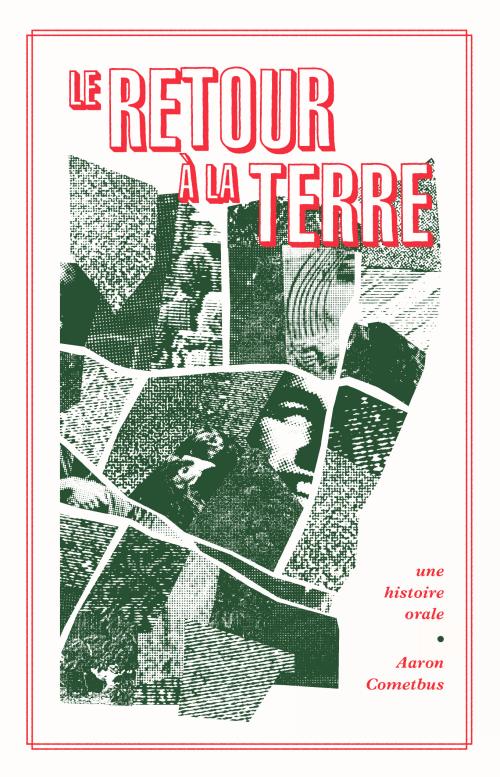
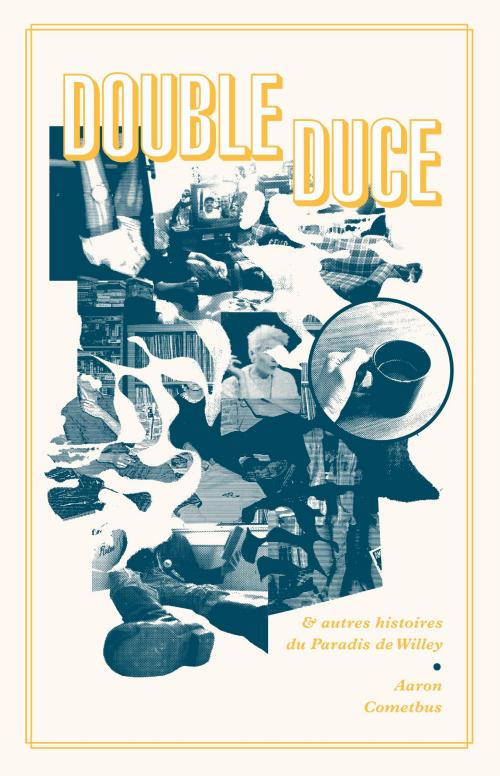
Two books by Aaron Cometbus: *Le retour à la terre* (Return to the Land) and *Double duce*. The print run wasn’t that crazy. Around 700, because I didn’t have a distribution at the time. Now, we’re closer to 1,000. Some books were sold very well, so we reprint them.
Can you tell us about how your books are distributed?
In the book industry, the distributor is a very important intermediary. We’re glad we’re no longer doing that job when we used to (Laughs)! It’s hard work. It involves presenting the book to booksellers and handling all the logistics to supply them.
The black box of the book world is really logistics. At the end of 2023, we started working with Harmonia Mundi and gained access to more bookstores. As the profit margin increases, the price of the book goes up a little. But it got me more time for other things!
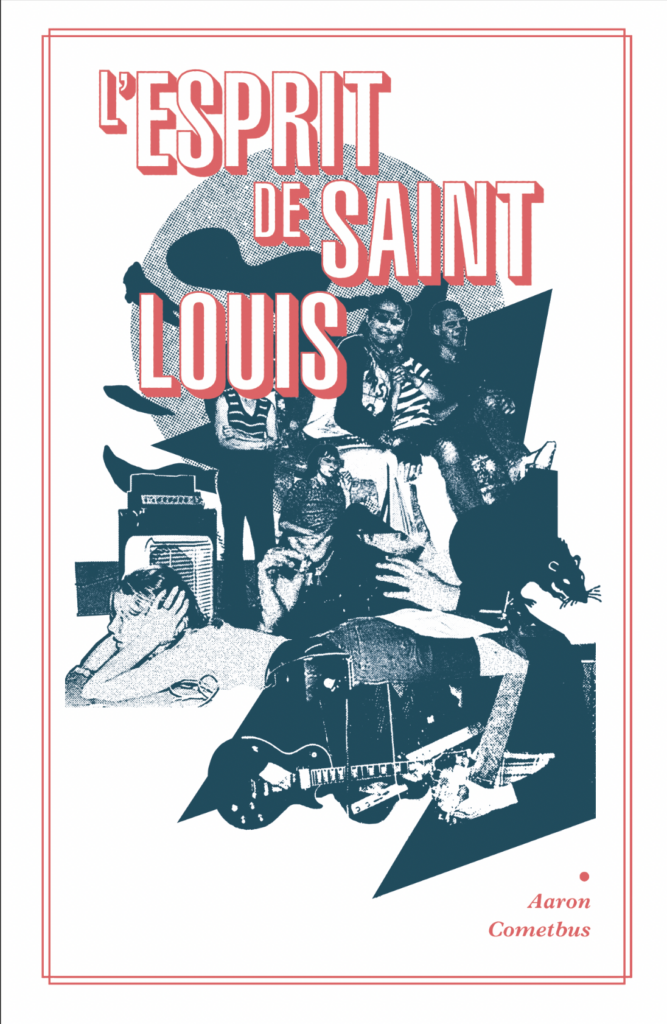
I’d like to talk about one of the the key author of Demain les Flammes: Aaron Cometbus. Can you tell us about him? How did you discover him?
I discovered him when I was 15. There were translations of his writings in fanzines in the late 90s (Stéphane Delevacque’s “Rad Party”). It was one of the only places where you could find this American punk lifestyle transcribed into words.
Then I read his first novel in English: Double Duce, published in 1997. It really made an impression on me. I saw in it a reflection of what I saw around me. I saw a way of describing punk that didn’t exist here.
For Cometbus, punk is just a backdrop. What’s important is the description of punks’ lives in an intimate way.
The facts, the dates, the album titles, the history of the bands—that’s not really the point. We’re talking about a lifestyle. About feelings. We’re talking about what’s beautiful about it, we’re discussing the collective dynamics... I wanted to make this perspective available in France. So that punk isn’t just about the music, or a topic for geeks.
Cometbus’s writing can sometimes be compared to Kerouac…
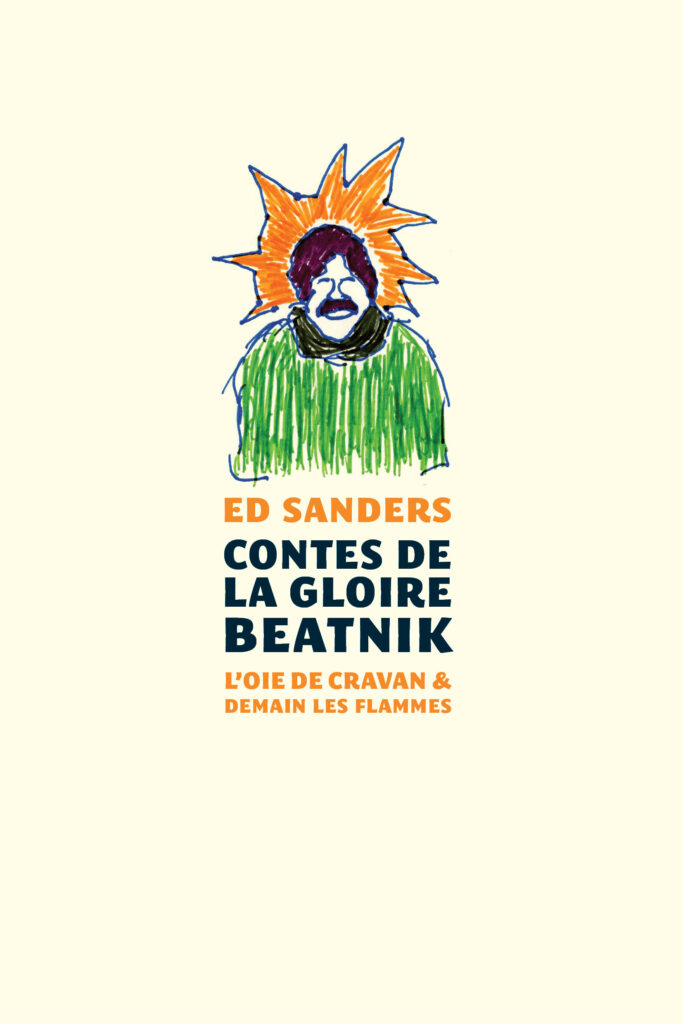
He’s one of Cometbus’s major influences. We can also mention Ed Sanders, a great writer of the Beat Generation. His approach is similar. He writes with that kind of offbeat tone. Rather than talking about a famous event in the best possible way, he’ll tell it to you in the form of a kind of rough poetry. It’s not about aestheticizing the writing. The most important thing is to bring out the essence of it. That’s what’s most important. It was this offbeat quality that interested me about Cometbus.
How did you get in touch with him?
In 2012. A team from Lyon had published a translation of one of Aaron’s books: “China tour with Green Day”. He had come to promote the book in France, during a tour with a band he was accompanying. I did an interview with him.
After that, we corresponded a lot. I started talking to him about the idea of publishing two of his books. He has a P.O. box and is very responsive. He’s a really good correspondent! In 2018, I really got into it thanks to an excellent translator, David Mourey from Grenoble. I also translated a few of his books by myself afterward.
Was he satisfied with the result?
He was really happy to see his work published in French-speaking countries. He’s someone who values a great deal of freedom, and he’s also very meticulous. He follows this editorial process very closely. It turns out he really liked our work. It hasn’t been translated that much until then. Just in France and Germany.
He’s very involved in the translation process, and that’s lucky for us, because a lot of questions arise when you go from one language to another. His writing seems simple, but there’s a lot of style on the sounds of words. And on references too. Sometimes, during proofreading, it’s funny to see how he rediscovers his own work (Laughs)! Lately, it’s been cool working on Post-Mortem because it’s a much more recent book…
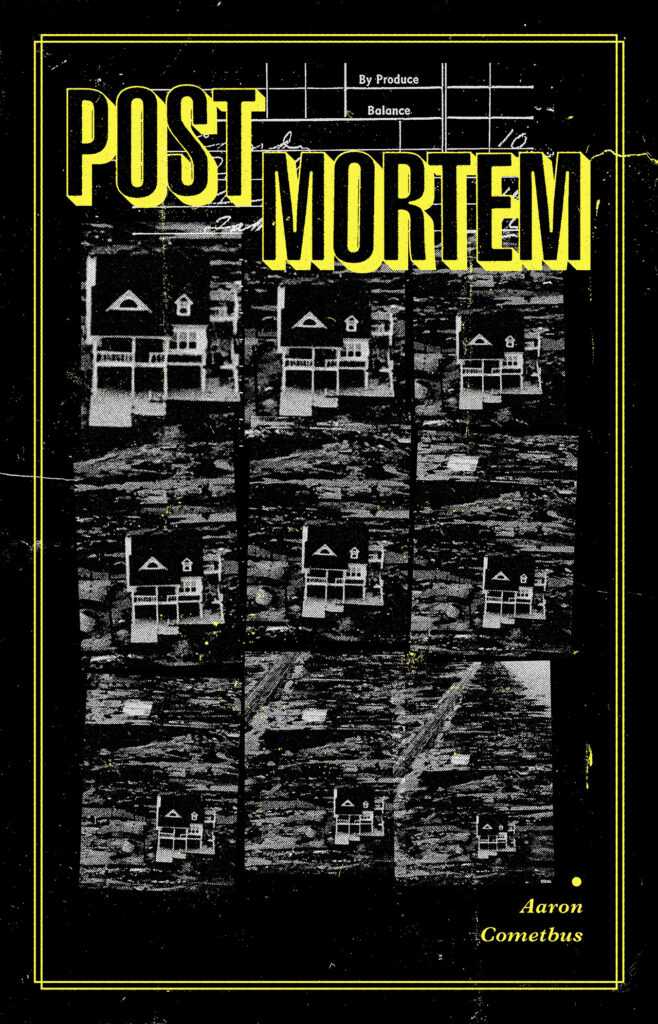
Actually, this is your latest release. Can you tell us more about Post-Mortem?
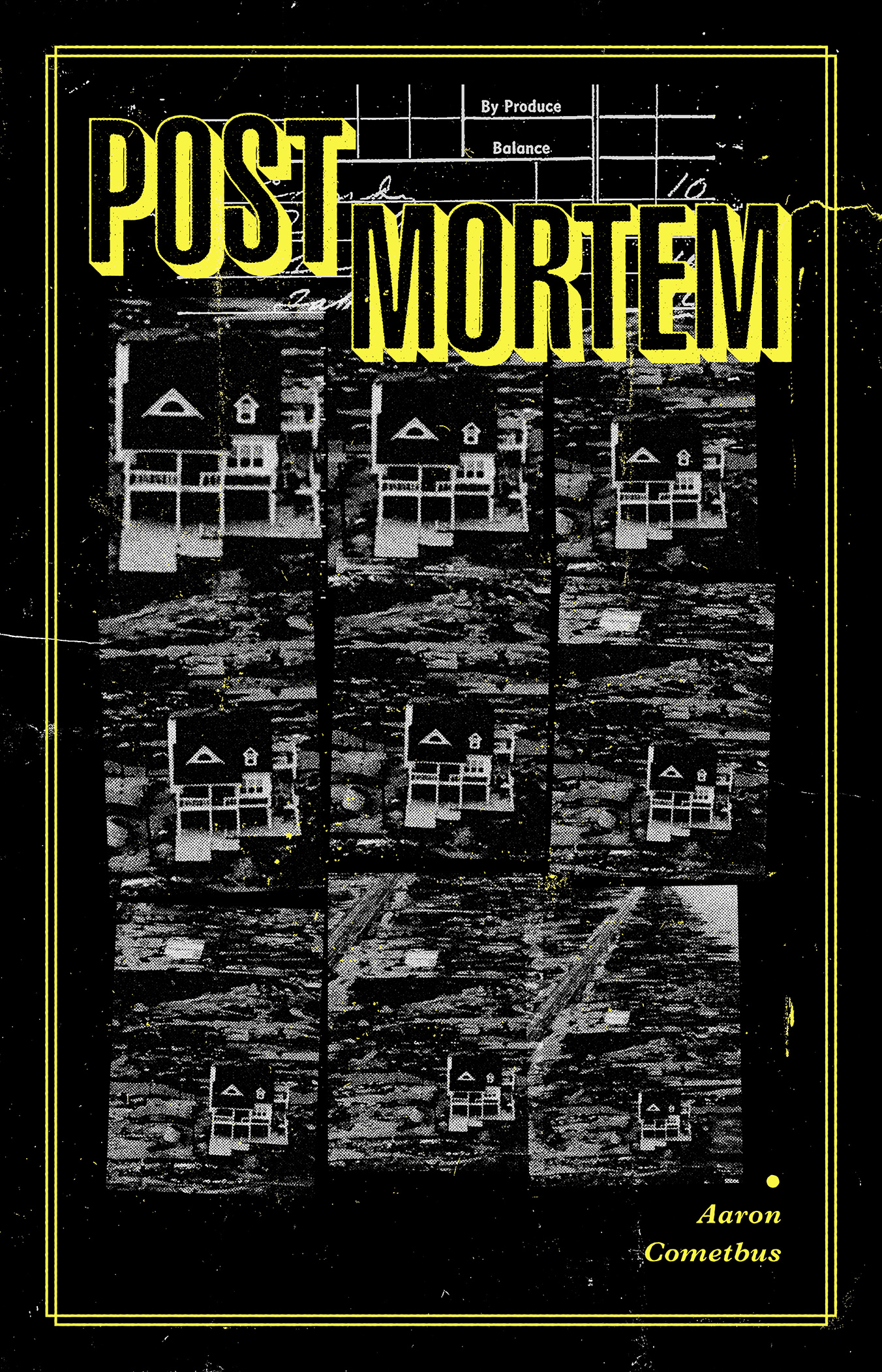
Title says it all. Post-Mortem is both an autopsy and a reckoning. This double meaning is at the central meaning of the book. It’s about a punk who, after 40 years of service, questions the legacy of these collective lives over time.
What remains of everything we’ve created so far? What worked? What were our failures? It’s a journey through several American cities. A reflection on what has withstood the test of time.
As the book unfolds, we realize that the capacity of certain spaces to structure themselves has been of paramount importance.
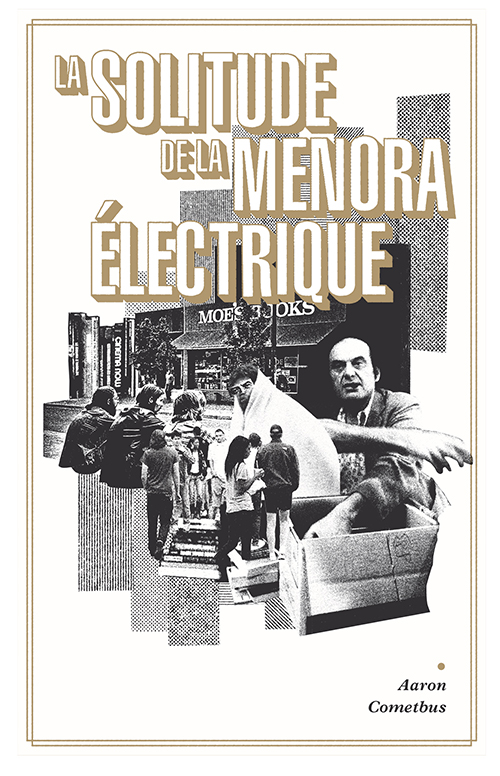
He raises serious questions about the insides of the punk music industry.
Yes, he’s someone who started in the 80s and lived through the 90s, the era of his friends in Green Day’s going mainstream. He’s a privileged witness to what happened during that period.
There was a huge amount of money involved. It’s nothing like what we know today. This ties into one of the major questions of the decade: “Did you sell out to the industry?” “Did you stay true to yourself?”
Beyond this question, Cometbus asks another: “Ultimately, what have we accomplished?” In doing so, he examines Epitaph Records, the success of Bad Religion, Thrasher magazine, the Seattle scene surrounding Nirvana…
He’s also interested in the “smaller” stories, the journeys of DIY labels that still exist today. Interestingly (and less so in France), he delves into the issue of money. He challenges the supposed distinction between major labels and entities perceived as “home made.” In short, there’s a demand for truth. A need to set the record straight…
Back to Demain les Flammes. Was it also an opportunity to publish personal works? I’m thinking of And “Et s’ouvre enfin la maison close” (Finally brothel doors opens ED), which is linked to the history of the squat called “le clandé” in Toulouse.

Absolutely. It’s a pretty huge space for publishing freedom. I’m still staying true to my original editorial line: talking about countercultures with a literary perspective. This connection is essential. What interests me is that I don’t see many other publishing houses that share this approach. This space appeals to me. I’m really enjoying it. I have many other projects in mind because so many texts deserve to exist.
Regarding my own books (like Et s’ouvre enfin la maison close), it’s clearly Cometbus’s work that have influenced me.
There are so many incredible stories worth telling. They’re right there, all around us. Sometimes so close that many people seem not to see them.
Many stories related to punk music carry a “mythical” aura. But sometimes we enter the realm of fantasy. Because for us, these stories are quite distant. In time, and in space.
It’s important to say this: Cometbus lived in California and New York during a major period. His stories are eminently local. He knows this territory, he lived there. There’s a real authenticity to it. For me, we all have stories to record and it’s at the heart of our own reality.