
Lucie Drazek – Interview
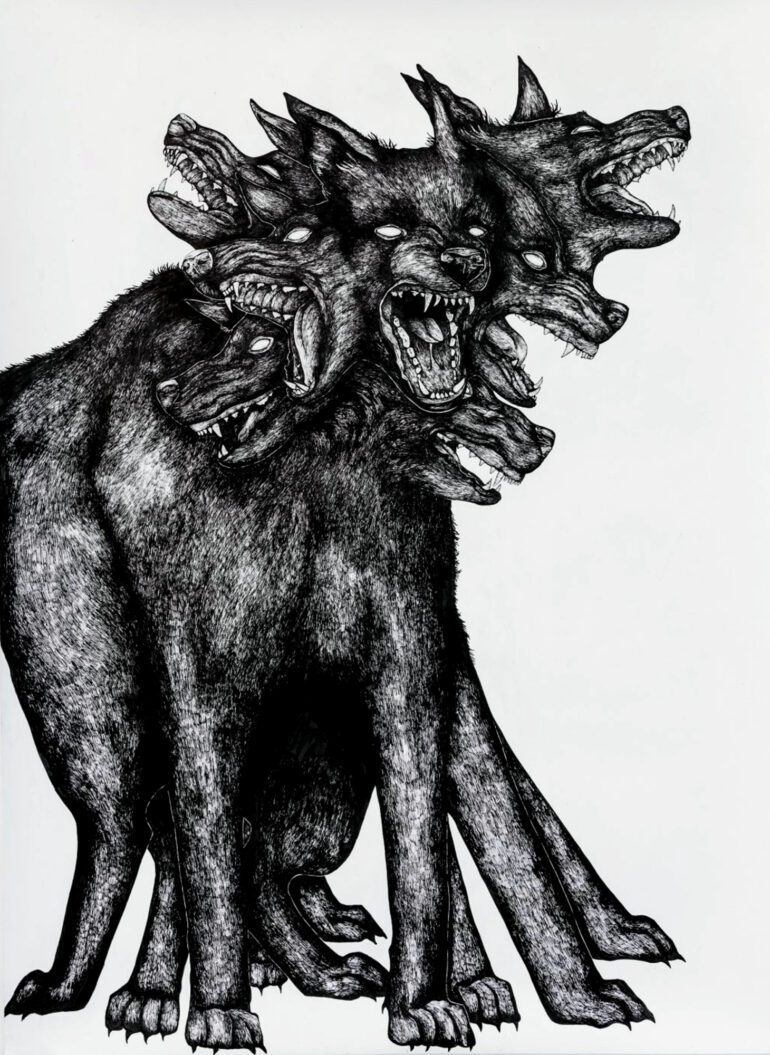
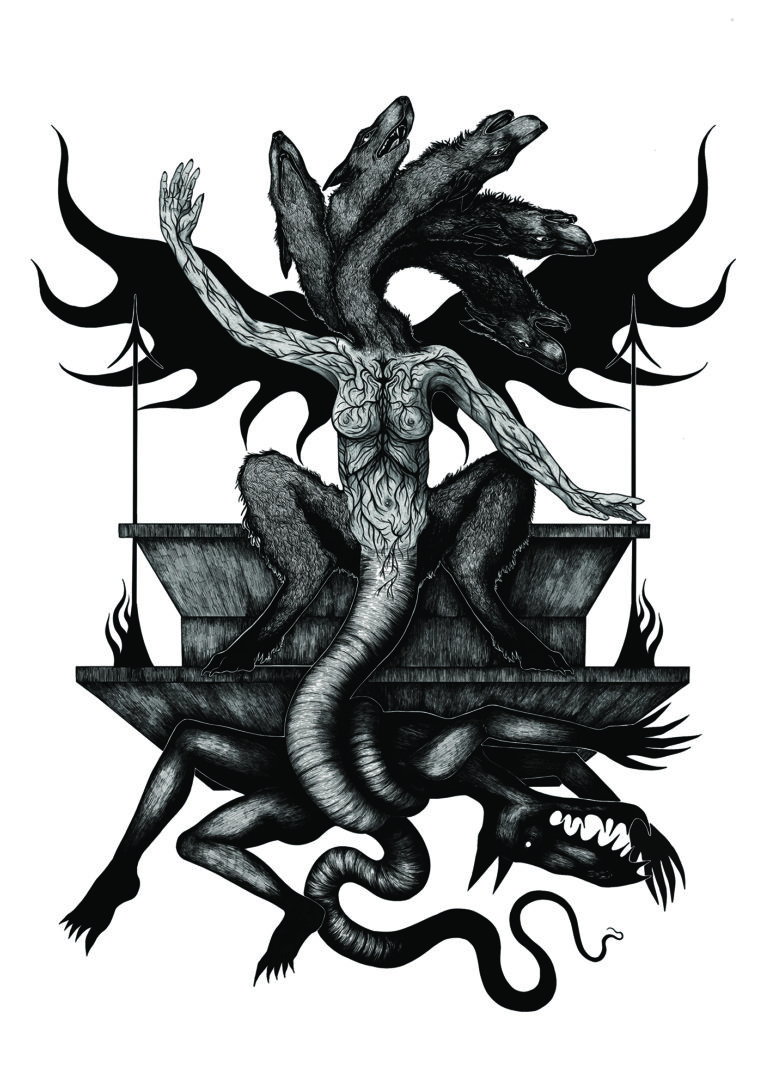
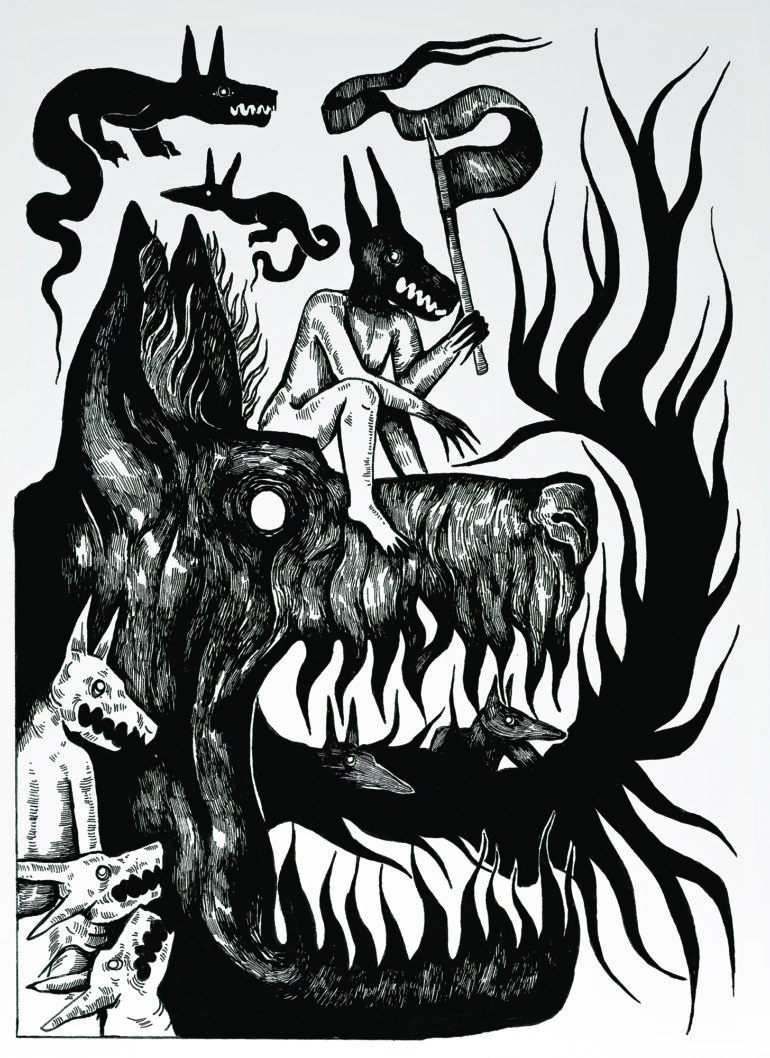
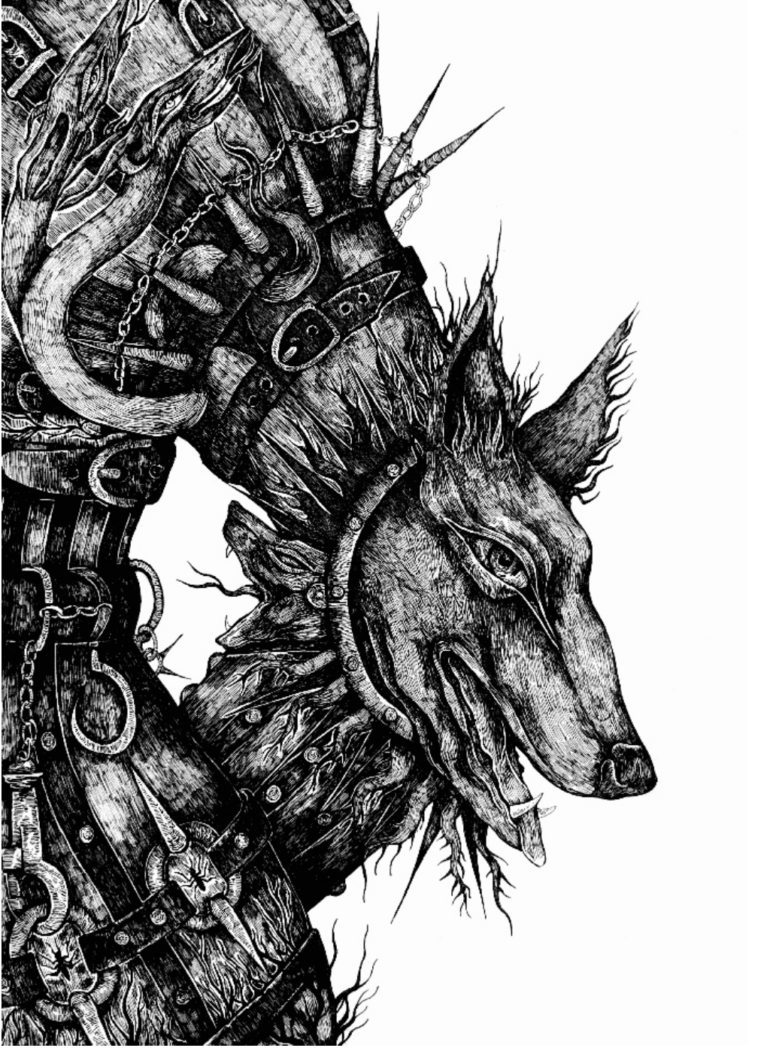
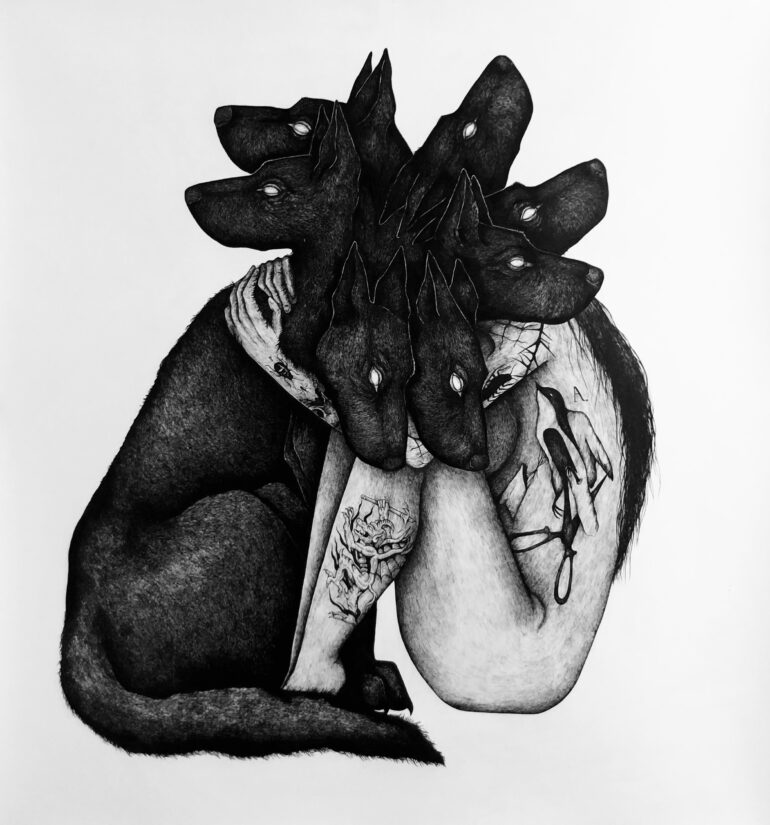
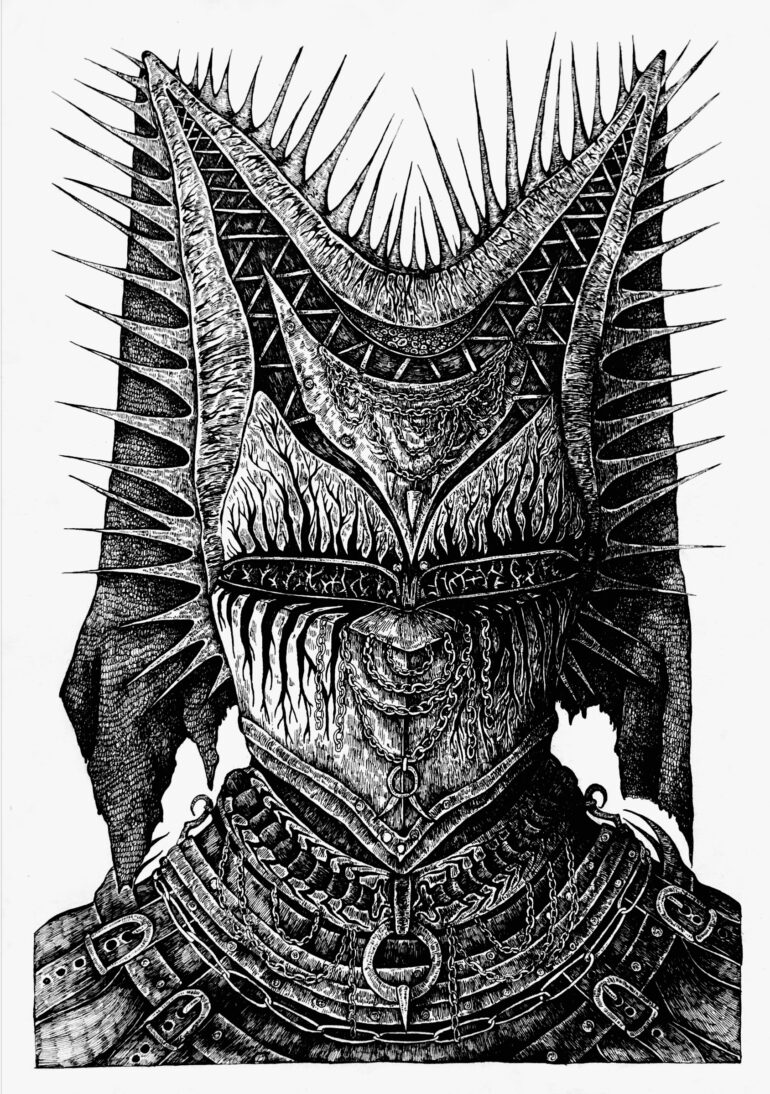
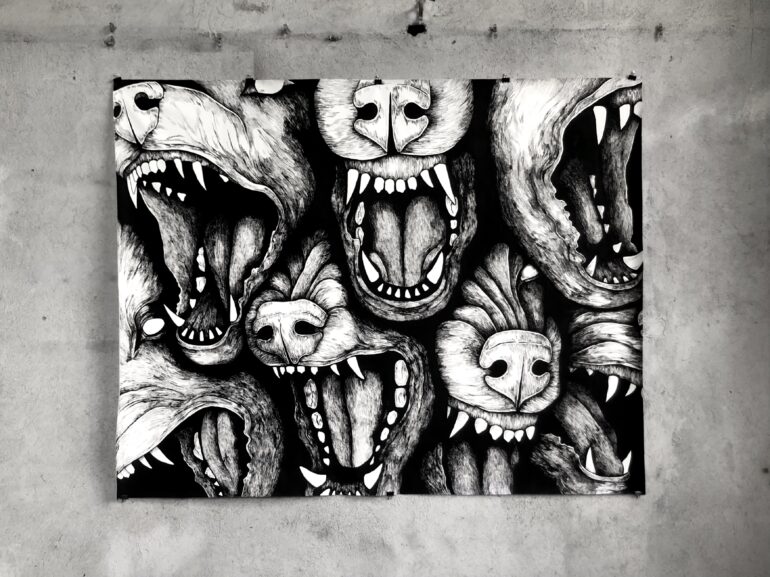
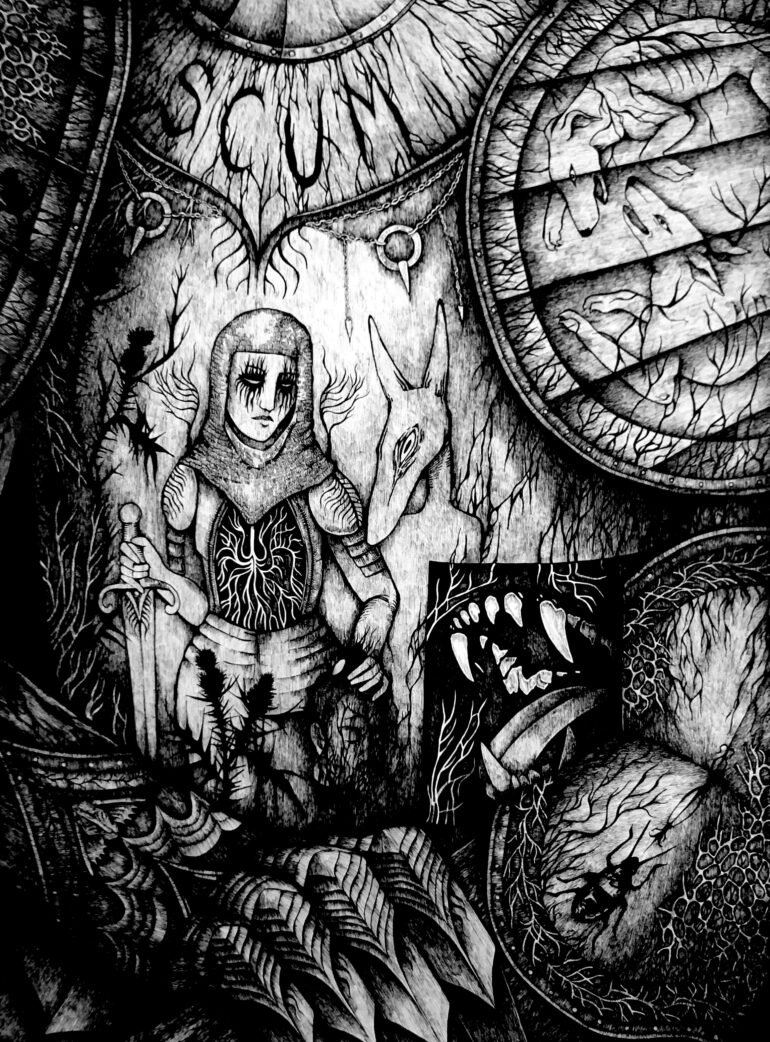
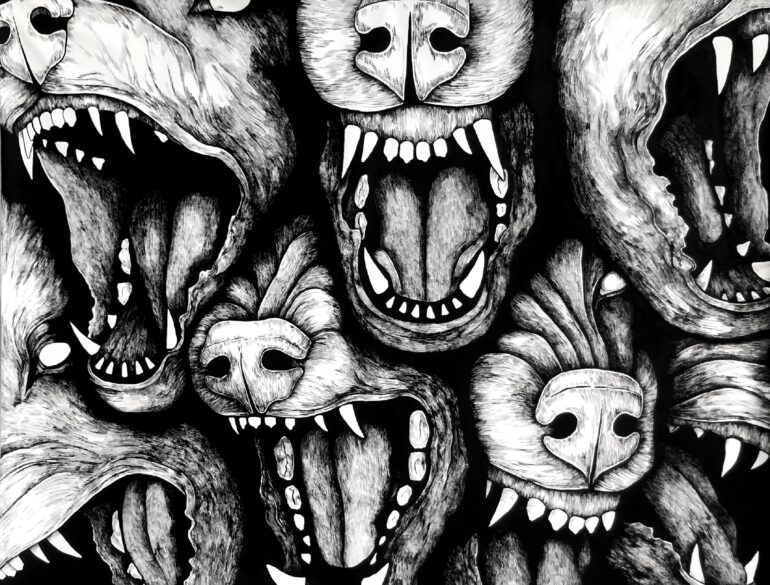
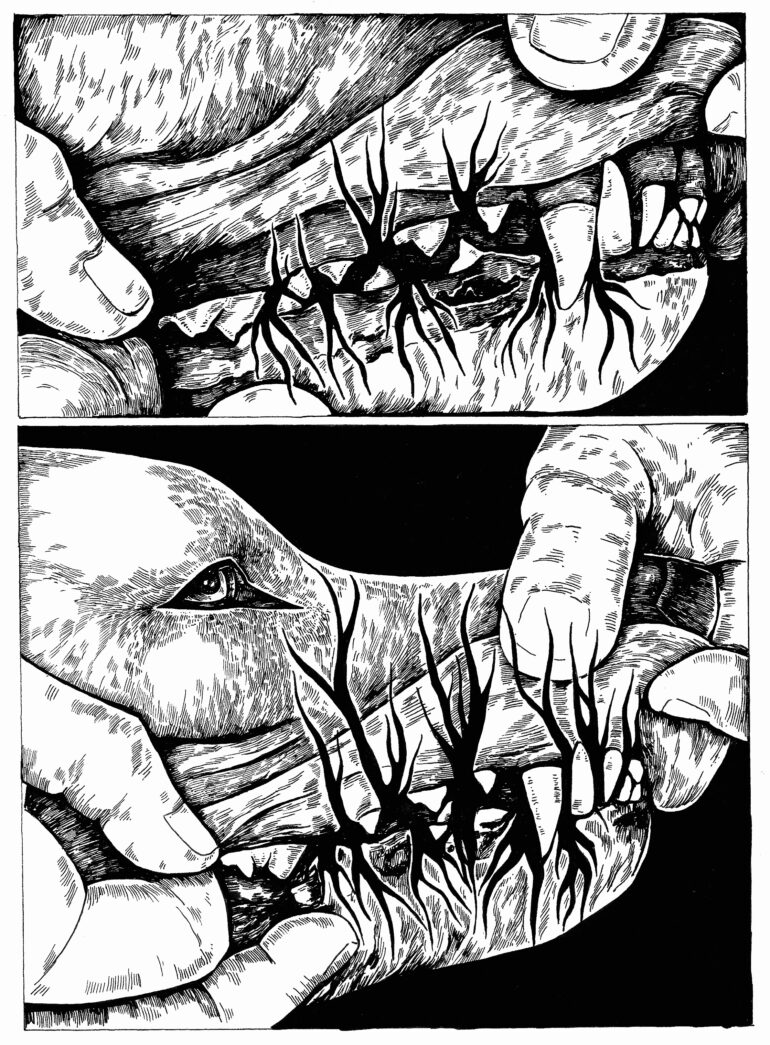
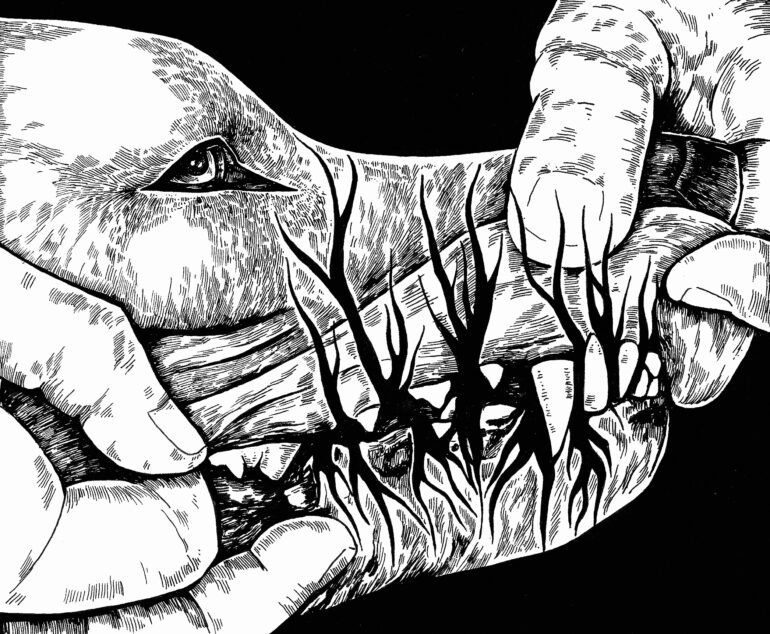
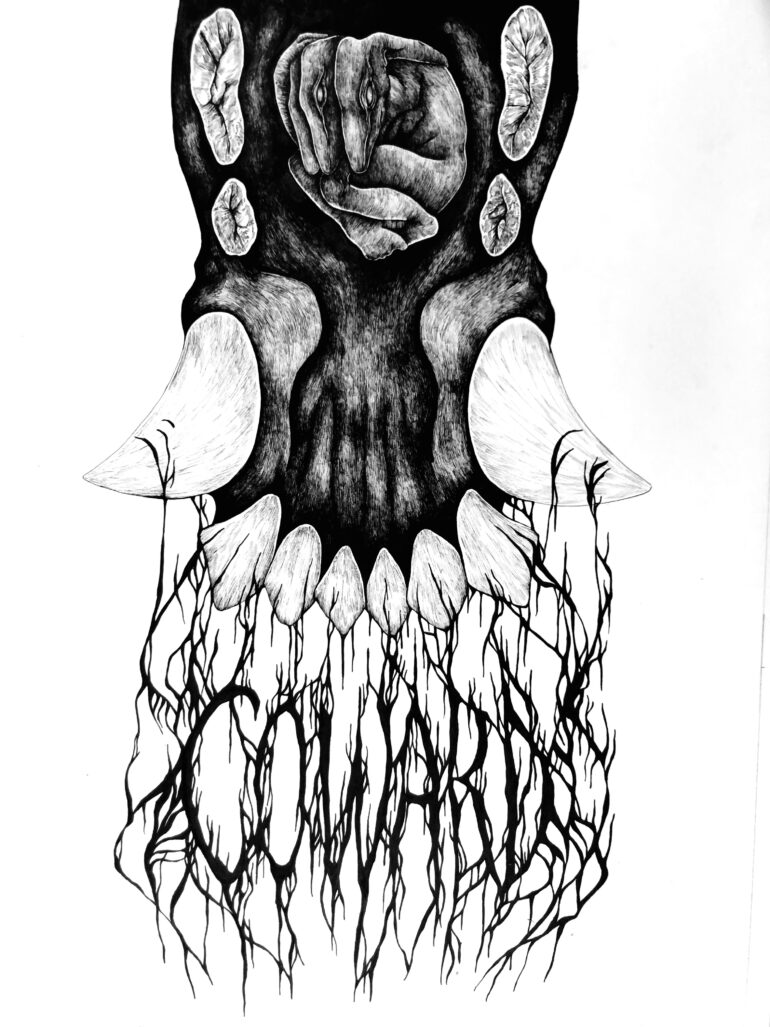
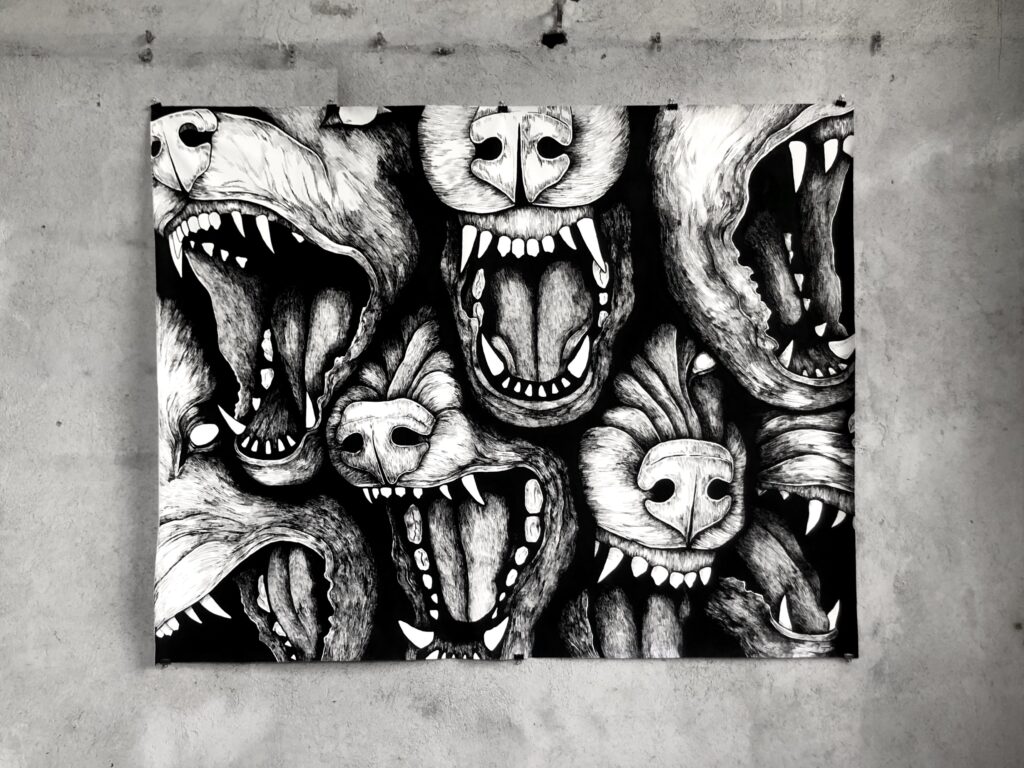
Lucie Drazek’s drawings immediately caught our eye !!! Inside her rage-inhabited bestiaries, made of infinite roaring and sharp canines teeth, the illustrator converts her anguish into a wayward force that heals and appeases. These are tools to resist the patriarchy and the increasingly invasive fascist menaces.
Lucie, the floor is yours!
I Interview by Polka B. & translated by Julie B.

How did you start drawing? What inspired you back then?
Lucie Drazek : I used to do a lot of comics. It was what I liked doing, what I wanted to do. I kept going this way alone as a self-taught artist, and after high-school I applied to the Beaux-Arts. I come from a family where we didn’t care much for culture. I didn’t know anything of this milieu. I wasn’t easy for me because this kind of school tends to standardise you, when I was already used to drawing animals with lots of narrative. In the end, the somewhat rigid framework of the Beaux-Arts didn’t fit me.
Did this mistrust in the institutions influence your drawing style in a way?
Totally. In a more global way, contemporary art is inherently bourgeois-coded. I entered a form of resistance against that. And to state it clearly, there are a lot of patriarcal violences and abuses in arts schools. There’s still a long way to go. My drawing was a kind of refuge. But I’m glad I hanged on, because I ended up getting my diploma!
Did you have a will to make a living out of it when you started? Did you shape your artistic vision thinking of the « career » prospect?
It’s a really complex question, and to be honest I didn’t really think about it back then because when I was at school they kept telling me my work wasn’t that good. I wasn’t really expecting anything. My mindset was to do as good as I could, and see where it led me… I thought, whatever happened, I could always switch paths later. But in the end, I realised that many people liked my work. It really me picked me up. I ended up finding the time, and I had one foot in contemporary art and the other one in micro-publishing. I love fanzine festivals…I feels very much like me, I love it.
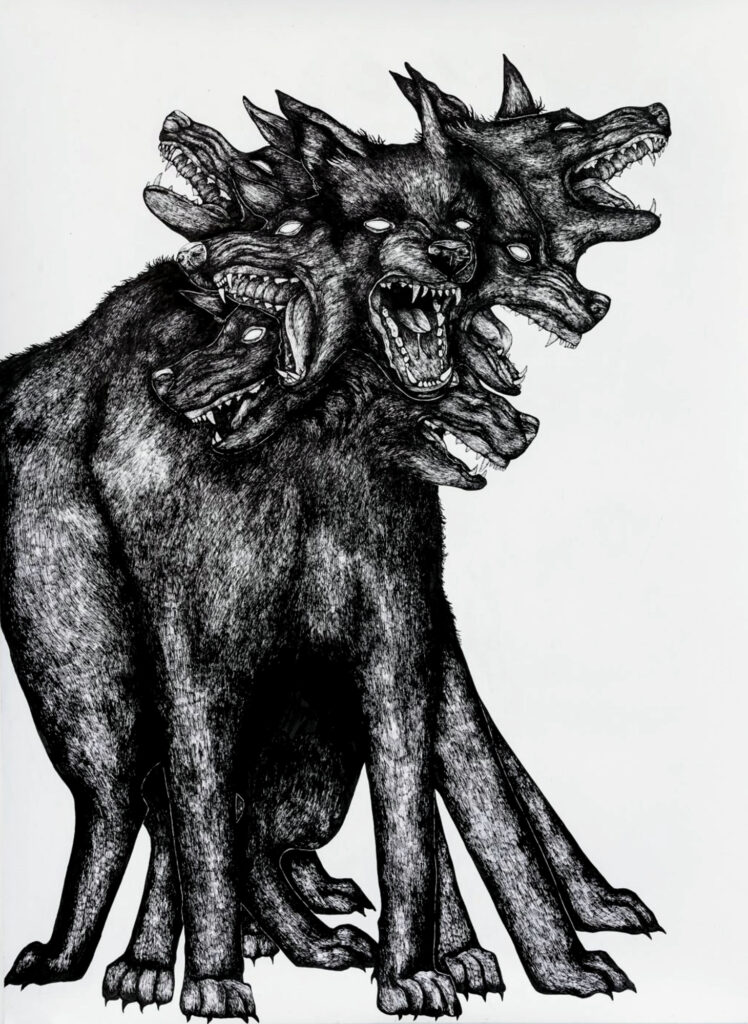
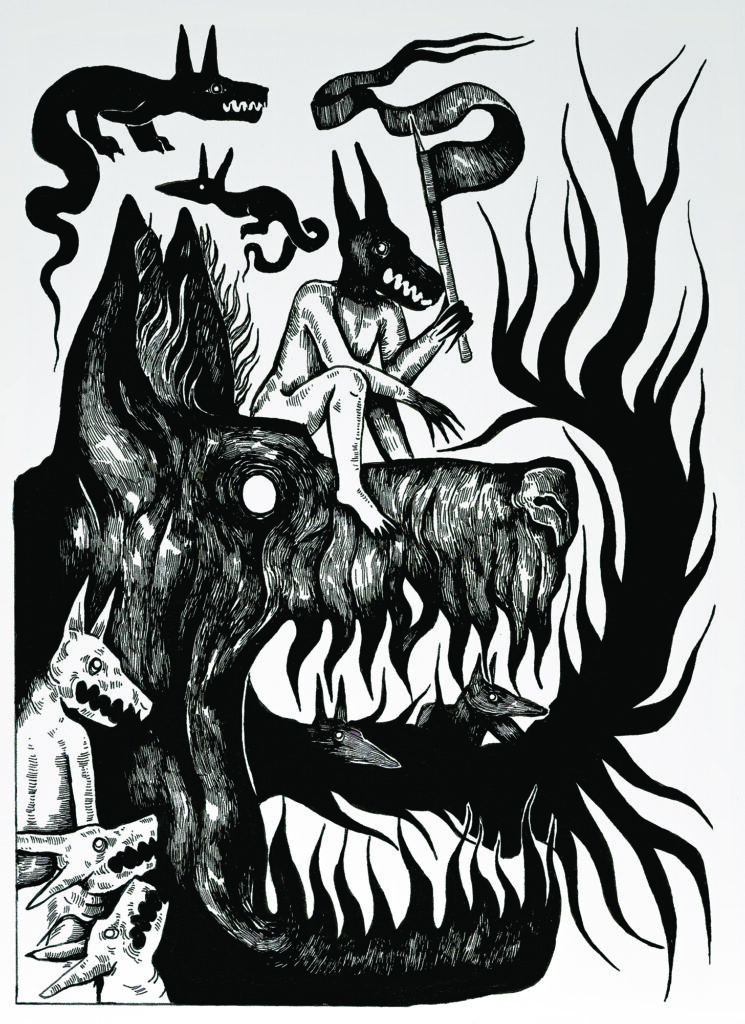
Your work is full of references to the folk tales of your native region, the Nivernais-Morcan. How do these legends influence your illustrations? Can you tell us more about it?
It’s something I really wanted to reclaim. I live in Dijon now, but I’ve spent my teenage in Nevers. It’s a post-industrial town, it’s kinda dead, there’s no work. It’s located right in the heart of France’s so-called « diagonale du vide ». Not a lot happens there, it gets really boring.
When I came to Dijon, I really felt like bumpkin! (Laughs) At first I wished I was from there, I deeply regretted not to come from a cool city. But as time went by, I felt more like embracing the places I came from, my childhood region, and to own my story and speak about these forgotten places. I immersed myself in these stories for my graduation project. It really interested me, especially since theses tales tend to fall into oblivion as generations go by.
You like drawing monstrous, ferocious and « unloved » figures. Is it related to the folk tales?
The tales I found are kind of classic. You find the usual predatory « monsters ». In an agricultural region, the wolf is the ultimate « unloved » figure! The monster is often the allegory of alterity, danger, of what we view as menacing.
I also grew interested in those we pin as undesirable, the «ESOD» (in French « Espèces susceptibles d’occasionner des dégâts », « Species likely to cause damage »), like the crows, that you’re allowed to kill without legal limitation.
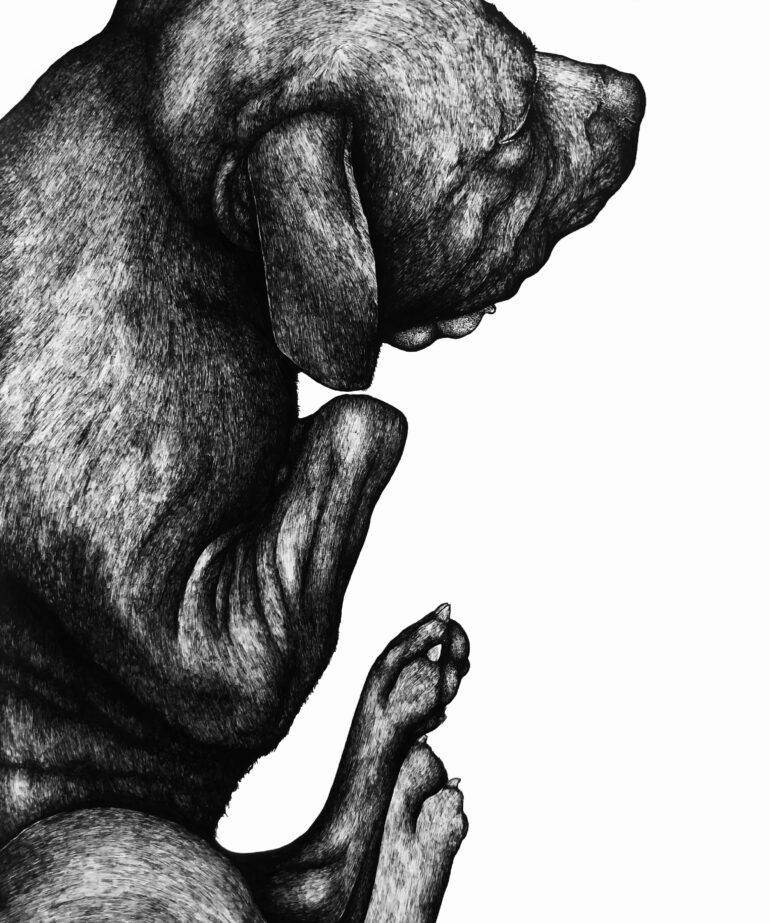
The figure of the female dog is central in my work : she embodies a wayward force, a presence engaged in struggle. She’s an ally, a guardian, a companion.
It’s also a way to reclaim the insult « bitch » as a form of strength, and to turn the tale into a space of resistance.
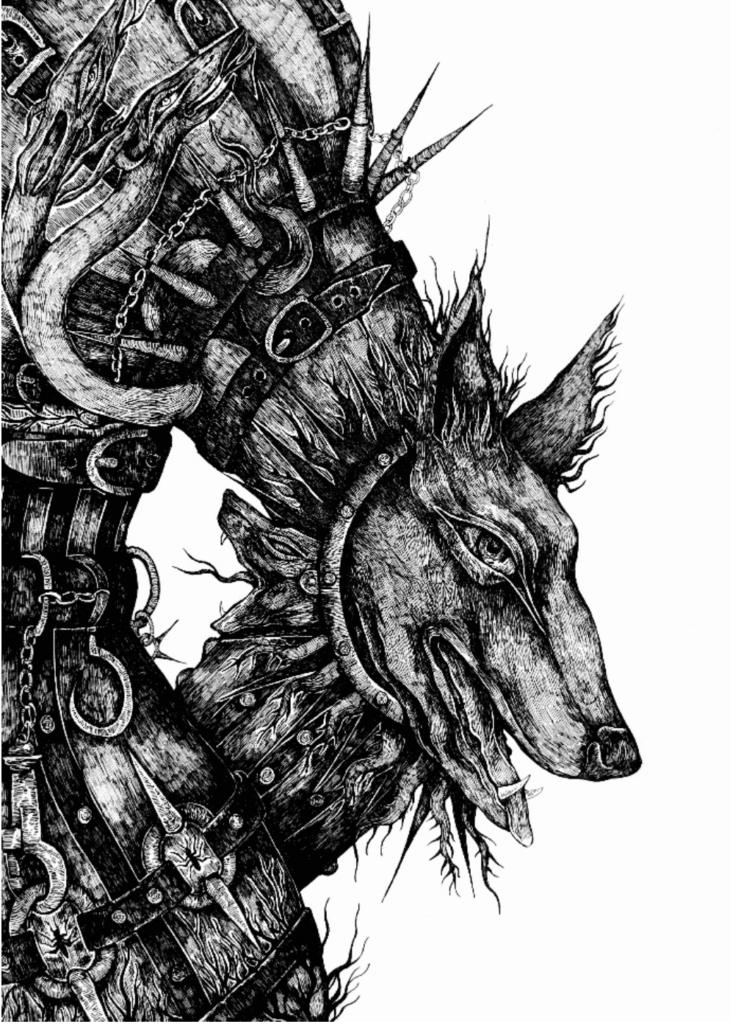
There’s a lot of rage in your drawings. Is there an explanation to this urge to express violence in most of your illustrations?
It’s always been underlying in me. I’m only just starting to own it now. The whole work around the folk tales belongs to a fantastical universe, but I infuse it with contemporary issues and claims.
When I was working of my master’s degree, Nahel had just been assassinated (on 2023, June 27th). Like many, I felt an immense rage. I let it flow. It was a vital response to the ongoing police, fascist, and patriarchal violence.
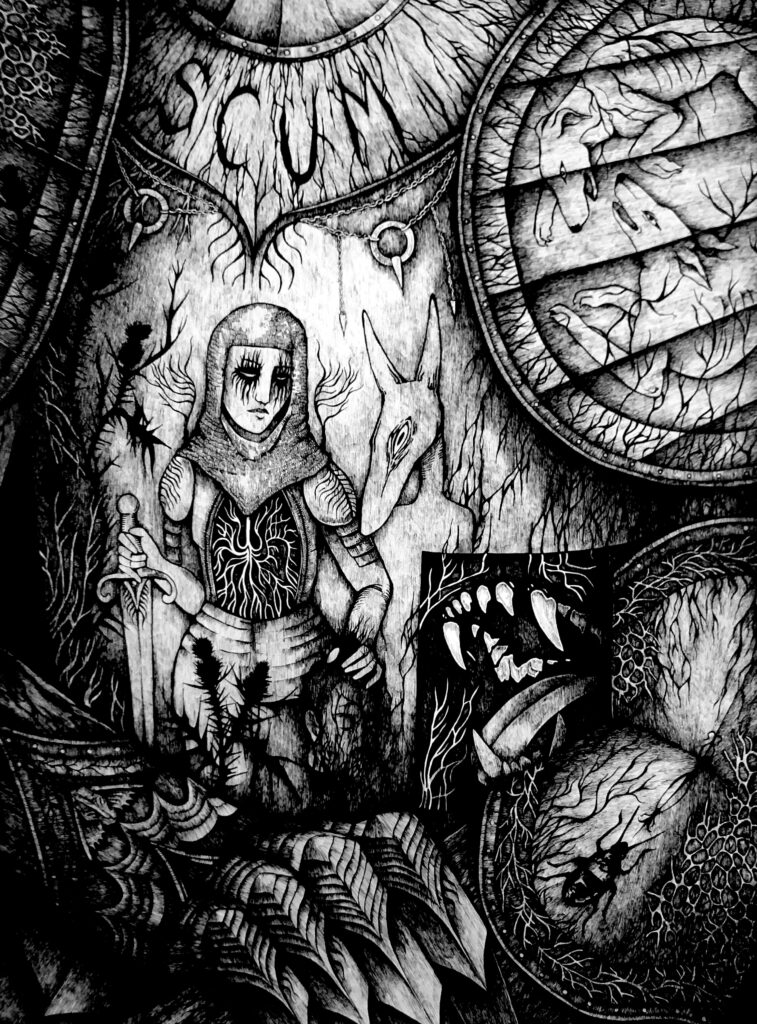
My drawings were a refuge. I needed to create sentinels, guardians. To protect myself. To protect others as well.
As a girl, you’re always taught to stay put. As if you always had to restrain yourself. This was also true regarding my drawing style. I’ve always been told it was too dark, too violent. But it’s exactly that side I want to explore.
But you also distance yourself from that violence.
Because you very rarely draw human figures.
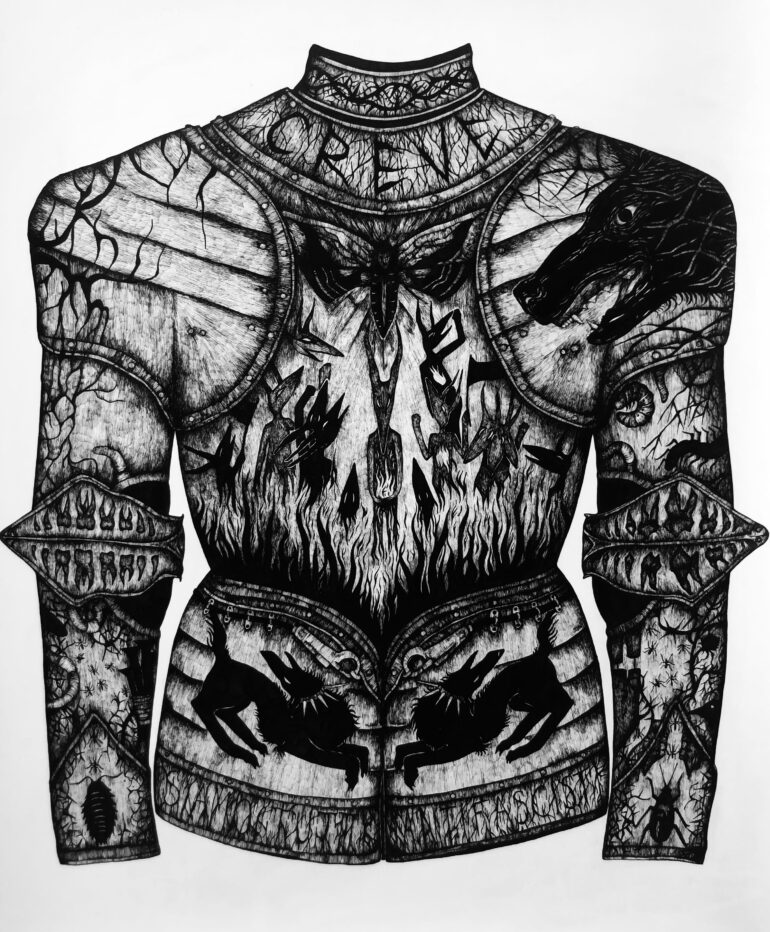
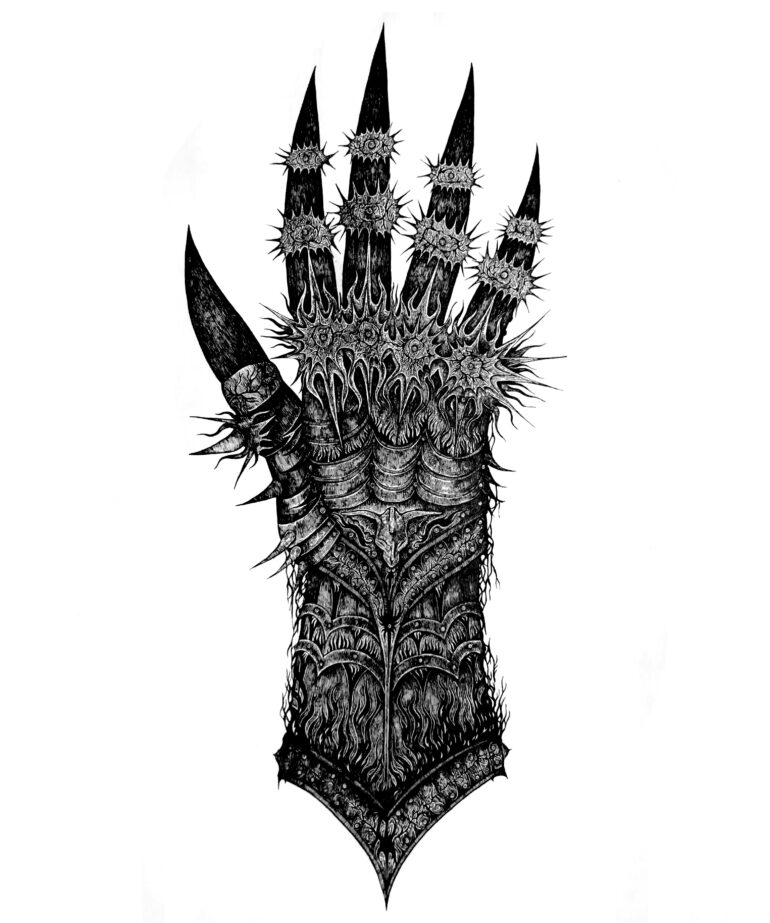
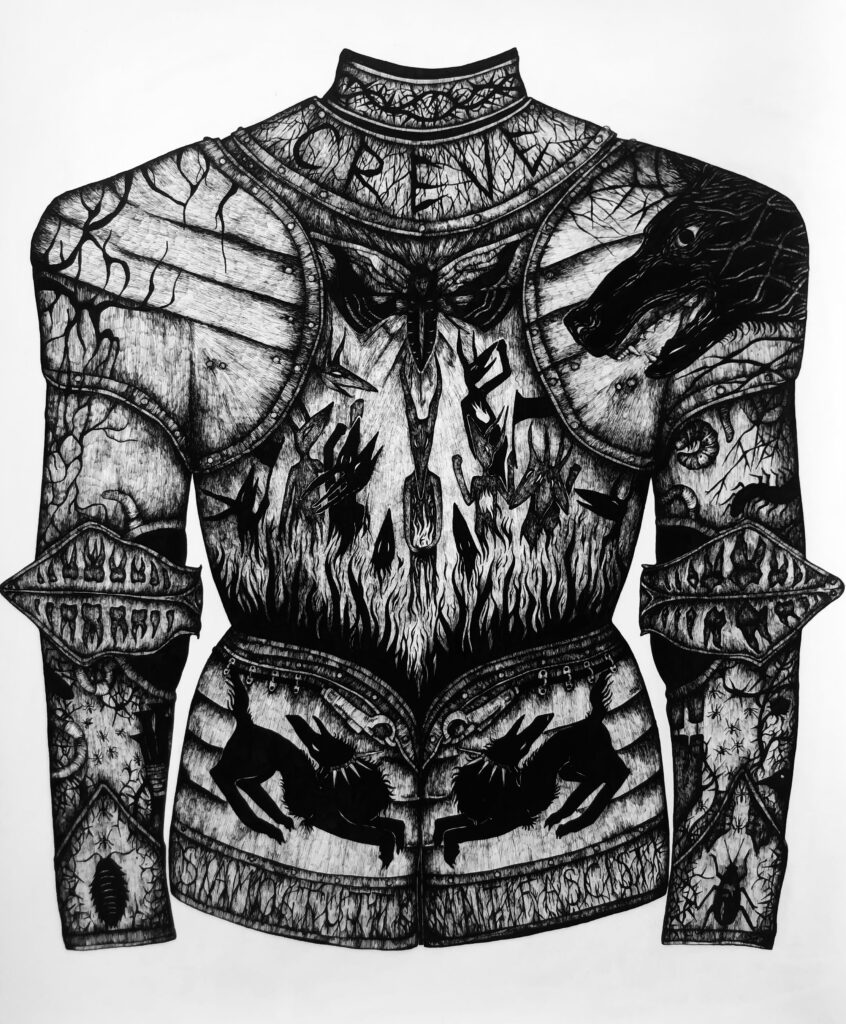
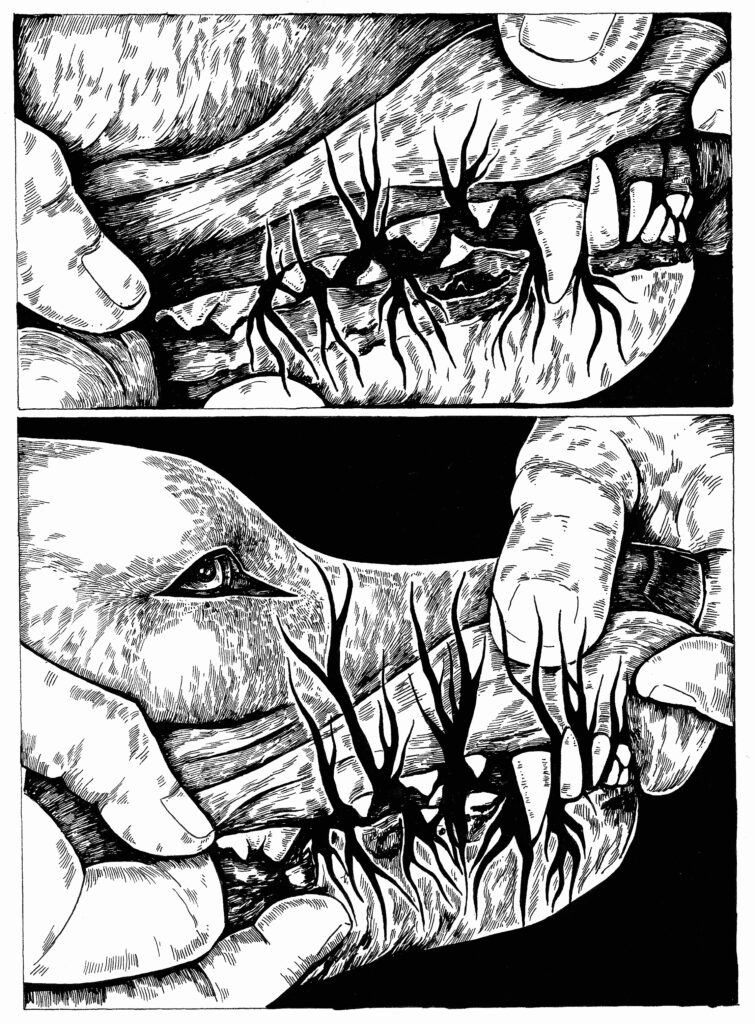
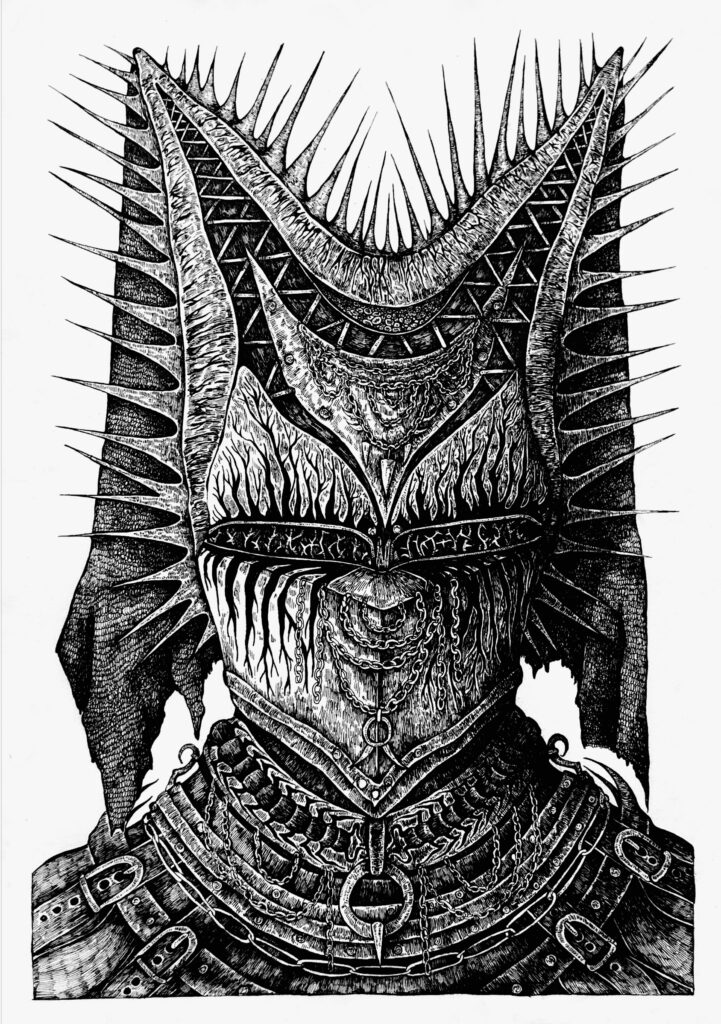
Even if human presence is often suggested through hands, armours…I do love putting animals at the forefront.
Your work is very thorough. Is spending a lot of time on one drawing part of your creative process?
I love working over long stretches of time. Some of my drawing necessitate more than a hundred hours of work.
It’s meditative to me. It’s a sort of statement against the fast pace and the constant pressure for productivity.
I read that you were very inspired by eco-feminists.
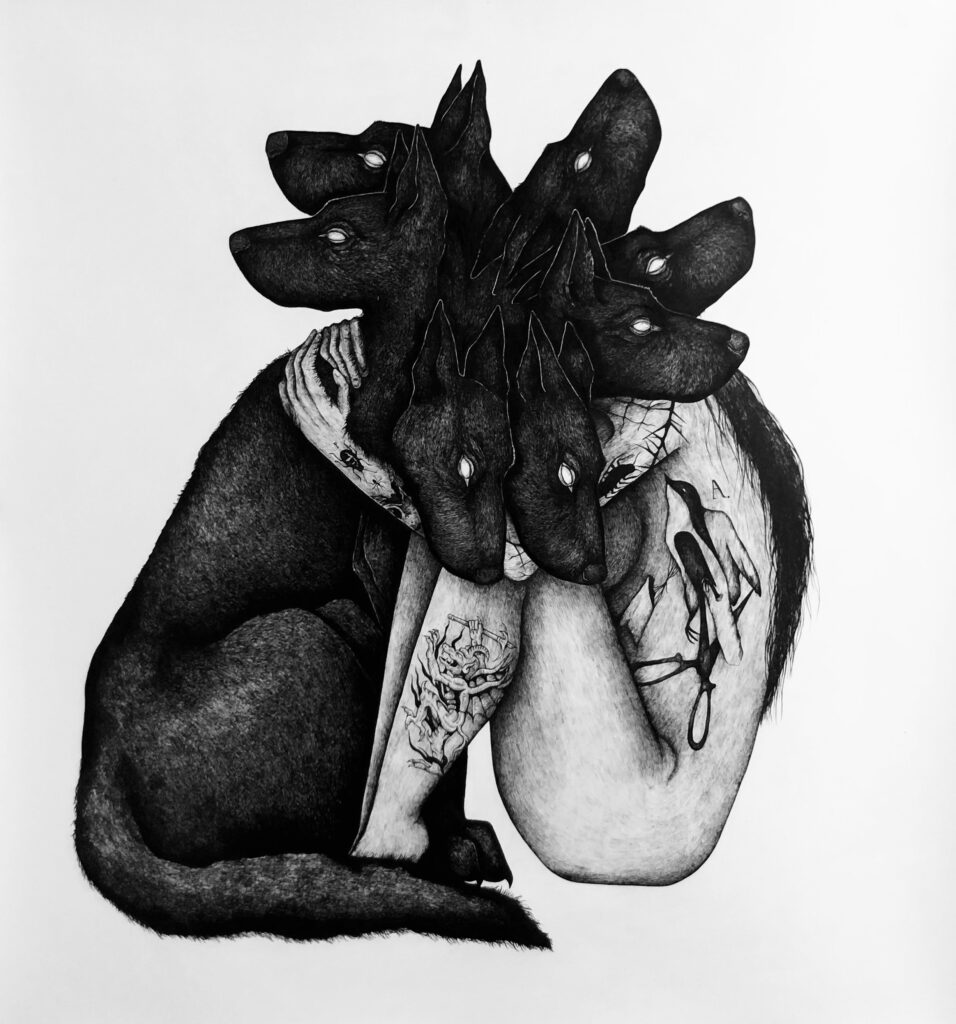
I dug a lot into these texts. I read Starhawk, as many did. But I also took my distances from it because I disagreed. I’m talking about concepts such as « sacred femininity », which is present in some of those texts. As if women’s strengths came from their uterus, or from their ability to procreate…
What I like about eco-feminism is the intersectionality. To me, struggles are not independent from one another. I feel really close to the writings of Donna Haraway. In her « Companion Species Manifesto », she talks about animals and the relationships we can create with them, as « beings who matter ». The book questions the global human domination, it’s really interesting.
An other book that marked me is « Assise, debout, couchée » by Ovidie. Through her relationship with dogs, she talks about the necessary alliance between « dirty bitches » and dogs against domination and patriarcal violence.
You style seems to evolve with time. There are more and more gradients, a focus on texture… Do you see the evolution of you work?
I feel like I’ve found my style only a few years ago. It really started out when I stopped trying to conform. My only obsession today is : digging fully into what I love. I’ve always wanted to experiment on a lot of things. I’d like to work on a longer narrative. I’d love to work on bigger scales : walls, canvas…and why not working on temporary formats. It’s exciting to translate your drawings onto other formats, especially during festivals.
It seems obvious, but I guess you listen to music while drawing?
Of course. I listen to a lot of punk and black metal. I love exploring this scene (the antifascist scene, of course!). To quote some punk bands : I love King Kong Meuf. The track « Kamikaz Étincelle » really fits my universe. I used to listen to it when I was drawing my armours ! On the black metal side, I love the aesthetic, it’s important to reclaim it. I really like Poisse, the band from Grenoble. The lead also sings in Lyon, as Lia Vesperale. She made a fanzine called Stryga. I think it’s great to assert yourself, to claim sharing and openness, within a scene that is, at first glance, hostile, and where NSBM is still unfortunately too present.
Any graphic artists you’d recommend?
Right now I am thinking of Imen Roulala . She works on linocut and I love it. It’s powerful, poetic, so beautiful!
Thank you!